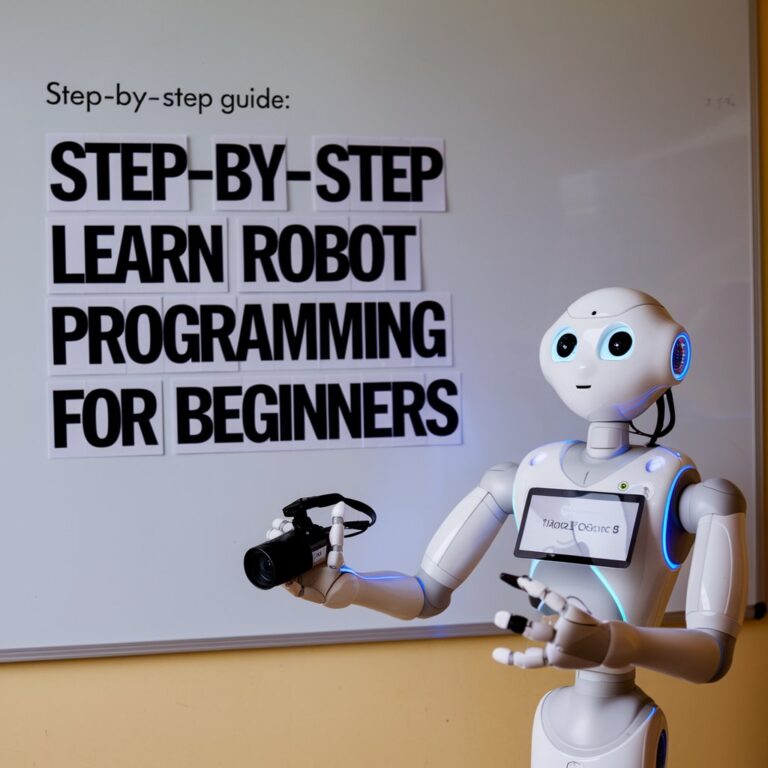
Step-by-Step Guide: Learn Robot Programming for Beginners
Step-by-Step Guide: Learn Robot Programming for Beginners Robotics programming is an exciting field blending technology,…
Robotics programming is an exciting field blending technology, creativity, and problem-solving. As automation becomes central to industries and daily life, learning how to program robots is a skill that can open countless doors. This step-by-step guide will help beginners navigate the world of robotics programming and start their journey effectively.
Robotics has become integral in areas like manufacturing, healthcare, and even home automation. Learning how to program robots is no longer a niche skill—it’s a gateway to creating innovative solutions and securing future-proof job opportunities.
Whether you’re looking to build your own robot or enhance existing ones, understanding how to communicate with machines is essential.
Before diving into coding, it’s vital to grasp the fundamentals of robotics and programming languages. Start by learning about these core components:
Familiarize yourself with basic programming concepts like:

Robots can be programmed in several languages. The right one depends on the type of robot and your goals. Here are the most popular options for beginners:
Python is widely used in robotics due to its simplicity and vast libraries. It’s ideal for beginners and supports frameworks like ROS (Robot Operating System).
Although more complex, C++ is often used for high-performance robotics tasks requiring real-time control.
For younger learners, Scratch offers a visual, block-based introduction to programming.
Start with Python for its beginner-friendly syntax and transition to C++ as you build more complex robots.
Step-by-Step Guide: Learn Robot Programming for Beginners Robotics programming is an exciting field blending technology,…

NEO Beta: The OpenAI-Powered Humanoid Robot Revolutionizing Home Assistance As technology continues to advance at…
Theory alone won’t make you a robotics expert. Invest in a robotics kit to put your knowledge into practice. Beginner-friendly kits include:

If you’re serious about robotics, ROS is a must-learn tool. It’s an open-source framework widely used in academia and industry for building robotic applications.
Creating your own robot is one of the most rewarding milestones. Start small and gradually increase complexity. Here’s a simple roadmap:

Using a kit or custom parts, assemble components like:
Programming robots can sometimes feel overwhelming. Engaging with a community can help you stay motivated and learn from experienced practitioners.
Once you’re comfortable with the basics, challenge yourself by exploring more advanced topics, such as:
| Tool/Resource | Purpose | Cost |
|---|---|---|
| Arduino IDE | Writing and uploading Arduino code | Free |
| Tinkercad | Simulate circuits and robotics designs | Free |
| Coursera Robotics Courses | Comprehensive learning | Free to Paid |
Learning robotics programming as a beginner might seem daunting, but with the right approach, it becomes an enjoyable journey. Start with the basics, choose the right tools, and immerse yourself in hands-on projects. The skills you acquire not only prepare you for exciting career opportunities but also empower you to innovate and solve real-world problems.
Take the first step today—your future in robotics awaits